
How to Set Up an In-Store Perfume Blending Bar
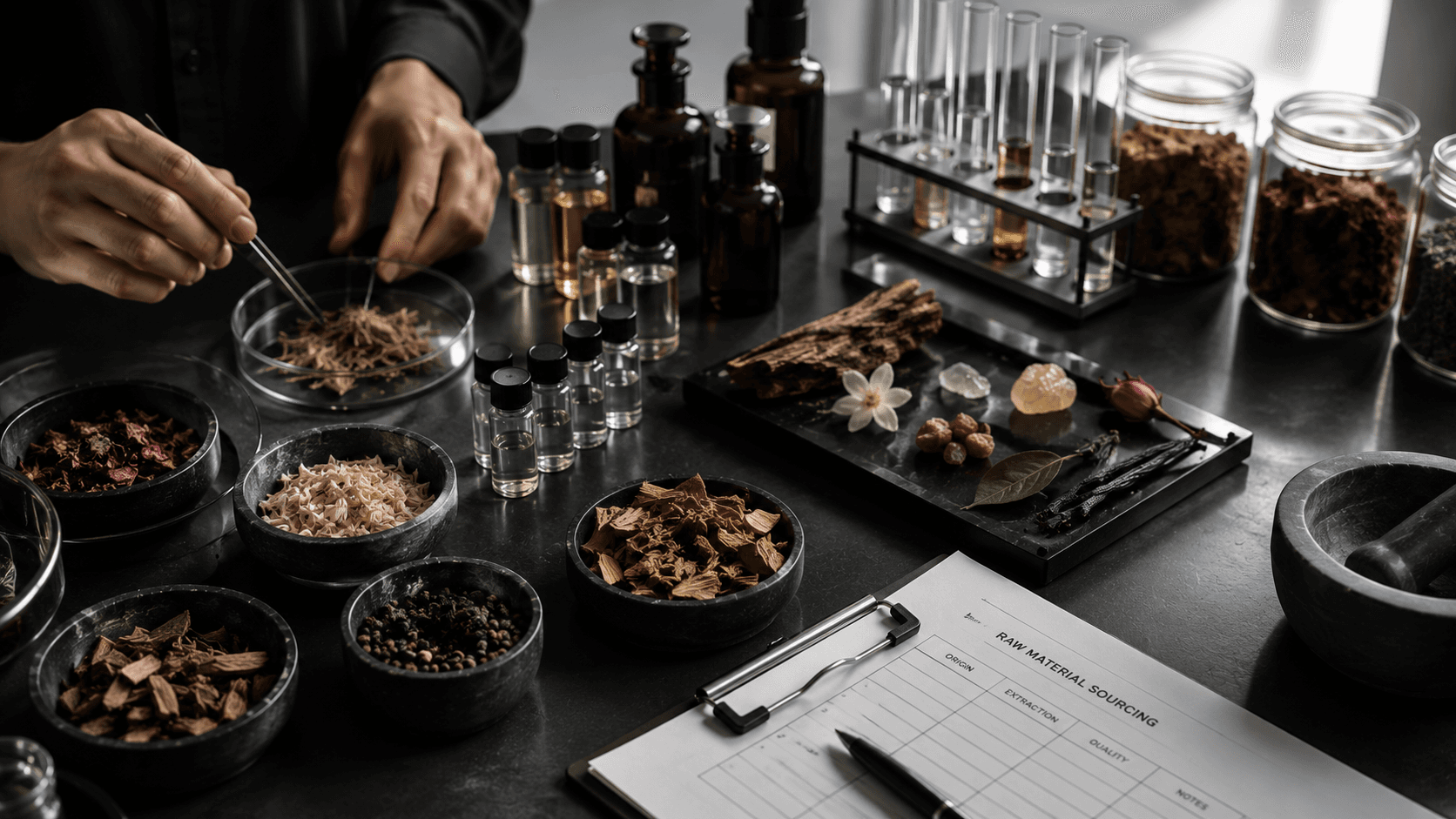
Picture a customer saying, “I want something woody, but the last one I bought felt too heavy.” Your perfume bar needs a way to turn that sentence into two or three things they can smell, remember which one they liked, and get the right blend into the bottle. That sequence is a good starting point for designing the counter.
Give each part of the visit a place
Walk the route as a customer. Leave space for a conversation, somewhere to lay labelled blotters side by side, and a separate surface for staff to prepare the selected bottle. At each handover, one person should know which customer, blend and bottle size they are working on.
Before opening a session, check the oils and accords available to staff and the bottle sizes you can fulfil. Run a practice visit on a busy shift. Watch where the next customer waits and where an interrupted staff member can find the selection again.
Turn preferences into a comparison
In Blend Engine, staff can check in a walk-in visitor, recall a returning customer’s preferences and record what they want on this visit. A regular preference for woody scents and today’s request for something lighter can both guide the session.
Staff can explore three suggested directions, smell them with the customer and record reactions. Label the blotters to match the directions on screen. Ask what the customer likes in the opening, then return to the same strip as it dries. Feedback such as “keep the cedar, soften the spice” gives the next refinement a clear purpose.
Let the selection travel with the bottle
Once the customer has chosen, staff review the blend, size and quantity against material availability. Blend Engine creates a production ticket for each physical bottle. If two friends choose different versions, the person preparing them can see which formula belongs to which ticket.
The production team can mark each bottle ready and record the completed order. During a trial session, ask a second staff member to take over at this point. If they can finish the right bottle from the ticket, the handover works even when the original adviser is helping someone else.
Scope the licence around the shop
Blend Engine is licensed per location, with ongoing orders of Basenote oils and accords. To discuss a licence, describe your counter space, staffing, appointment or walk-in model and how many sessions you expect on a busy day. Commercial terms are agreed on enquiry.
Bring one realistic scenario to the conversation. A boutique running private bookings for two and a department store running back-to-back walk-ins will have different stock and handover needs. Walking through one visit makes those differences visible before you fit out the bar.